

No products in the basket.

 Free Nationwide Delivery
- Free Nationwide Delivery
 Free Nationwide Delivery
Free Nationwide Delivery
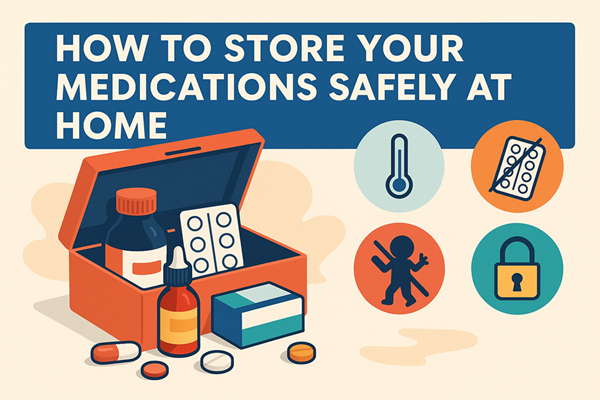
Most people keep their medicines wherever there’s an empty drawer or spare shelf. It’s convenient, but not always sensible. How you store medication affects how well it works, how long it lasts, and whether it stays out of the wrong hands. A bit of organisation makes a noticeable difference, especially if you rely on daily prescriptions.
Heat and humidity can cause tablets to break down faster than they should. Kitchens and bathrooms are usually the worst places because steam and rising temperatures are common. A bedroom drawer, hallway cupboard, or a dedicated box kept away from direct sunlight is usually a safer bet.
It’s tempting to throw packets, blister strips, and bottles into one basket, but mixing them creates confusion. Keep items in their original packaging so you can check the instructions, warnings, and expiry dates. Labels tell you exactly what each medicine is meant for, something you don’t want to guess.
Out-of-date medicines aren’t harmless. Some lose strength, some behave unpredictably, and others simply won’t do the job. Set aside a few minutes every couple of months to clear out anything past its use-by date. Your local pharmacy can advise on safe disposal if you’re unsure.
Even everyday items like paracetamol can be dangerous if taken by accident. Store everything high up or in a cupboard with a simple latch. If you have visitors, especially children, double-check that nothing is left on a worktop or bedside table.
Daily prescriptions, inhalers, and supplements should be easy to access, but still safely stored. A small organiser or labelled box works well. Keep occasional or emergency medicines somewhere separate to avoid mix-ups when you’re in a rush.
Some items genuinely need refrigeration, but many don’t. Follow the leaflet rather than assuming. If a medicine does need to stay cold, place it on a shelf rather than the fridge door, which warms up every time it’s opened. Keep it in a sealed container to protect it from moisture and food spills.
Transferring tablets into generic tubs or pill organisers can be convenient, but only do it when the instructions allow and when the medication is easy to identify. Anything requiring special conditions, moisture strips, light-proof packaging, or child-resistant caps, is best left as it is.
If a blister pack is torn, a label comes off, or a bottle cracks, don’t take chances. Medicines exposed to air or contamination can lose effectiveness. Replace them or speak to your pharmacy about the safest option.
If you use inhalers, EpiPens, or any other medication needed in a hurry, keep the usage instructions close by. It helps you or someone else act quickly in a stressful moment.
Safe storage isn’t complicated, but it does require consistency. A tidy, organised system protects your health, reduces waste, and ensures your treatments work as intended. If you’re ever unsure how a particular medication should be kept, follow the instructions on the packaging or ask a pharmacist for clarity.